


Imagine travelling the world not by aeroplane or ship, but by clock.
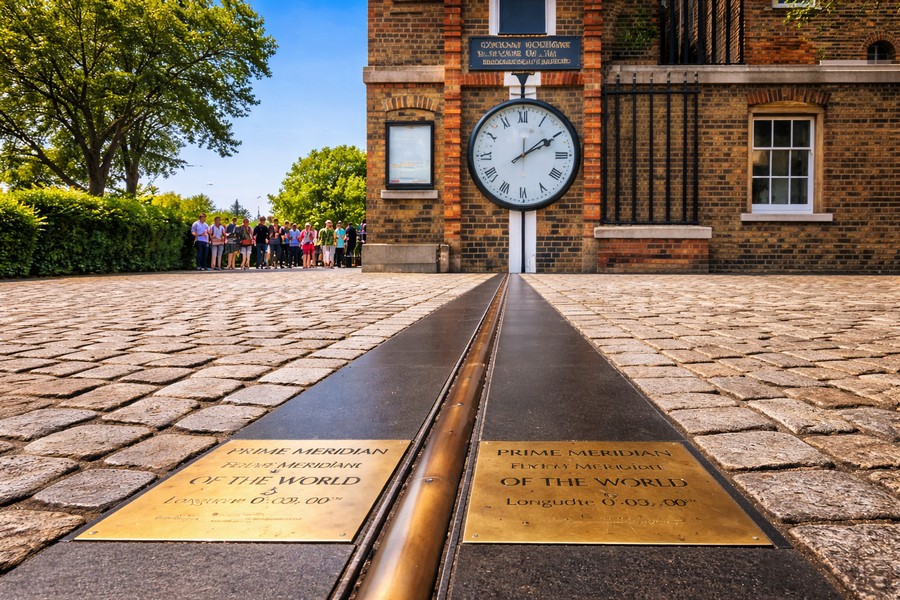
Your journey begins in a tranquil corner of London, where the air feels a little sharper and history sits comfortably in the stones. At the Royal Observatory in Greenwich, a slender strip of metal cuts through the courtyard like a secret seam in the planet’s tailoring. Step to one side and you are in the eastern hemisphere; step to the other and you are in the west. It is a simple gesture with an outsized consequence: this is where the modern world agreed to begin counting.
Here, the time reads Greenwich Mean Time—GMT—once the anchor point for every schedule, navigation chart, and international appointment.
In the nineteenth century, time was a surprisingly local affair. Each town kept its own “noon” by the sun: when the sky was highest, the day was halfway done. It worked well enough when journeys were measured in days, not minutes.

Then ships began crossing oceans with industrial certainty, and railways stitched nations together on timetables that demanded precision. The problem was not distance—it was disagreement. Noon in Bristol was not quite noon in London. Multiply that confusion across borders and oceans and the result was predictable: missed connections, muddled shipping logs, and a world that suddenly needed a shared language for time.
In 1884, an international conference made a bold, practical choice. One meridian would serve as the world’s “zero”—the starting line from which all longitudes (and, by extension, time zones) could be measured. Greenwich was selected largely because British nautical charts were already in wide global use. With that decision, GMT became the world’s reference clock: a calm, steady centre in an increasingly fast-moving age.
Yet GMT had a limitation. It was rooted in the Earth’s rotation—beautifully natural, but not perfectly reliable. Our planet is a living, wobbling timekeeper. It speeds up and slows down almost imperceptibly, its rotation nudged by oceans, winds, and the subtle physics of a changing world.
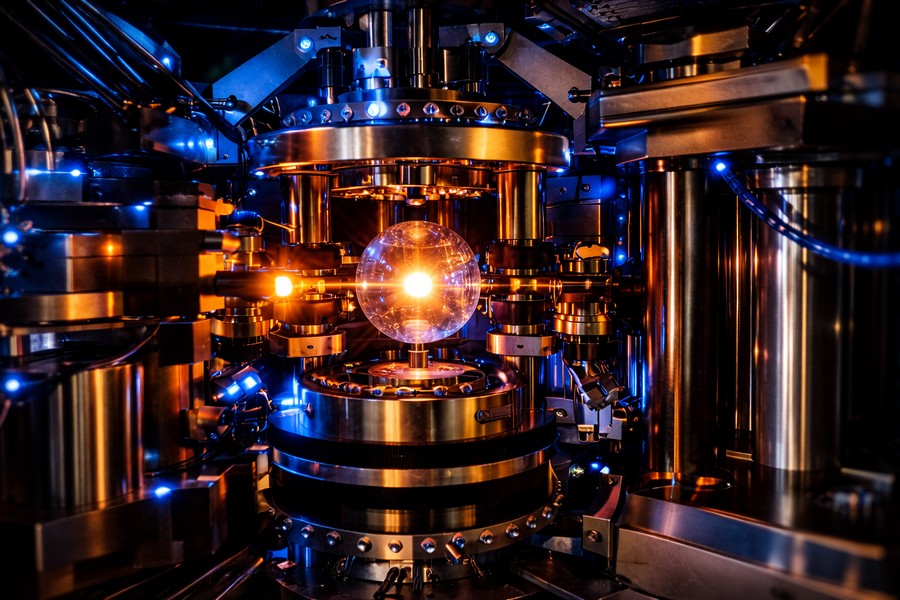
As technology evolved—telecommunications, satellite navigation, modern computing—the world needed time measured with a precision the sun could not guarantee. Enter the atomic clock: a masterpiece of human ingenuity that measures the second not by shadows on a dial, but by the steady rhythm of atoms themselves.
Atomic time is astonishingly consistent. The best atomic clocks are so accurate they would take an extraordinary span of time to drift by even a single second.
This leap in precision led to Coordinated Universal Time—UTC. Unlike GMT, UTC is built from an international network of atomic clocks, blended into a single global standard. It is maintained and published by the Bureau International des Poids et Mesures (BIPM), effectively the quiet curator of the world’s official time.
But there is a twist—because we still live on a rotating Earth. To keep our clocks aligned with the day-night cycle we experience, UTC is occasionally adjusted by adding a “leap second.” When the planet’s rotation drifts enough to matter, a single second is inserted so that civil time stays close to solar time.
GMT still lives on in everyday language—especially in the United Kingdom—and it remains a familiar shorthand. But in science, aviation, navigation, and global systems, UTC is the backbone: the time standard that keeps everything from satellite signals to stock exchanges marching in step.
No single country controls world time—and that, in itself, is part of the miracle.
UTC is overseen through international cooperation. The Earth’s rotation is monitored by the International Earth Rotation and Reference Systems Service (IERS), which determines when a leap second is required. BIPM, meanwhile, compiles and distributes UTC from the world’s atomic time data.
Time zones, however, are a different story. They are not “set” by nature or by a central authority, but by governments—often for reasons that have more to do with politics and economics than with geography.
That is why China, despite spanning what would naturally be five time zones, uses just one national time. It is also why India keeps a half-hour offset—UTC+5:30—a compromise designed to sit sensibly between its eastern and western extremes. Around the world you will find similar acts of compromise and identity: time as a tool of national cohesion, commercial convenience, or cultural rhythm.
Once you leave Greenwich, time becomes something you can feel shifting beneath your feet.
Move east, and hours are added. Move west, and hours are subtracted. Cross from London into continental Europe and you are suddenly an hour ahead—an immediate reminder that borders can change not only languages and cuisine, but the very hour of the day.
Continue east and the clock keeps climbing. Arrive in Thailand and you settle into UTC+7, where mornings feel bright and purposeful, and evenings arrive with a sense of tropical decisiveness. Continue across Asia and onward into the Pacific and you gain more hours still—until eventually you meet the edge of the calendar itself.
Out in the Pacific Ocean lies the International Date Line: a jagged, carefully negotiated boundary where the date flips forward or backward. Cross it in one direction and you “lose” a day; cross it the other way and you “gain” one. It is the closest thing we have to time travel without science fiction—proof that time is not merely measured, but managed.
Time zones are often imagined as neat vertical slices of the globe, each exactly one hour apart. Reality is far more interesting.
Some regions operate on half-hour offsets, and a select few use quarter-hours. Time zone borders rarely follow straight lines; they bend around countries, provinces, and practical needs. Islands, trade routes, and political alliances all leave fingerprints on the map of time.
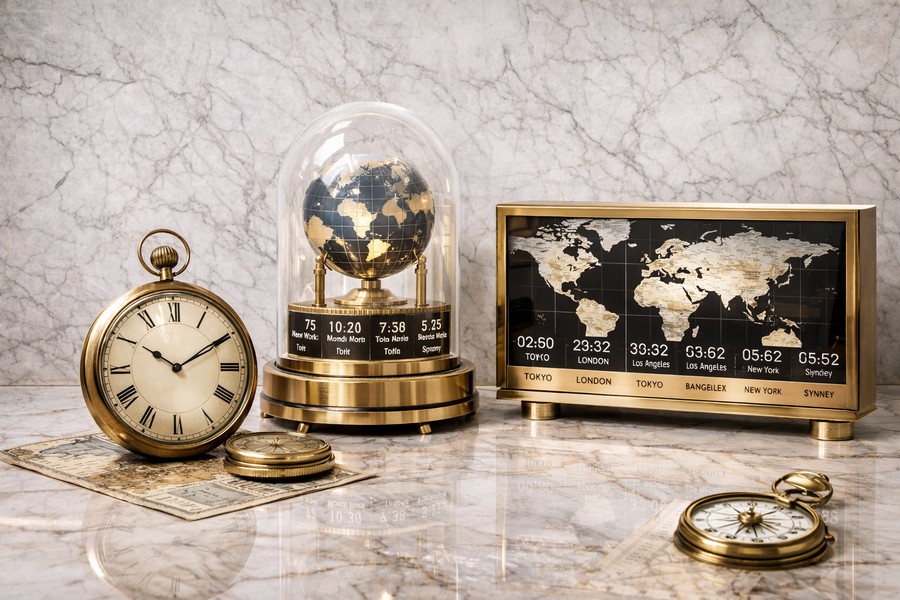
Daylight saving time is another layer—one that sits on top of UTC rather than within it. UTC never “springs forward” or “falls back.” Those shifts are local decisions, adopted or abandoned as governments reconsider what best suits their people.
And while atomic clocks define the second with exquisite precision, the Earth still has the final say when it comes to aligning civil time with the turning of the day. That balance—between cosmic reality and human coordination—is what makes global timekeeping so quietly extraordinary.
Every flight departure, every international phone call, every bank transfer across continents relies on this invisible agreement about time. It is rarely noticed, almost never celebrated, and yet it holds the modern world together with remarkable elegance.
So the next time you glance at your watch while travelling, remember: you are not only moving through space. You are stepping from one slice of time into another—measured from a thin line in Greenwich, refined by atoms, adjusted by astronomers, and sustained by a level of international cooperation we rarely stop to admire.