


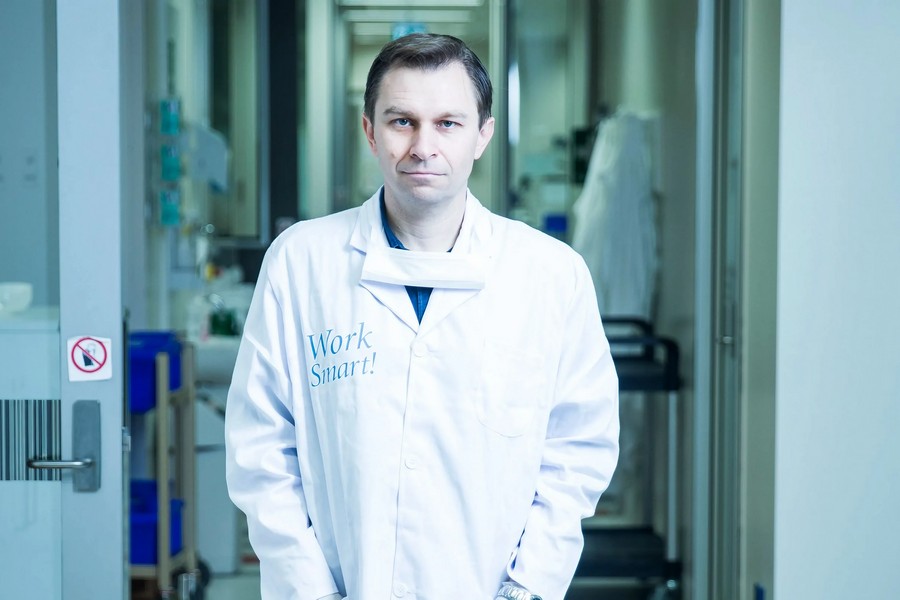
For most of human history, aging has been treated as an unalterable fact of life, the quiet tax we all pay for the privilege of being alive. Wrinkles, frailty, failing memory and, eventually, death were seen as inevitabilities rather than variables. David Sinclair, Professor of Genetics at Harvard Medical School, refuses to accept that. In his view, aging is not a fate but a condition – a “disease” of the body’s information system that can be slowed, halted and, ultimately, reversed.
Sinclair stands at the front line of longevity science, challenging our most basic assumptions about what it means to grow old. From his early work on resveratrol and sirtuins to his current focus on epigenetic reprogramming, he is sketching a future in which turning ninety could feel remarkably similar to turning forty. His vision is nothing less than a new operating system for human life.

At the heart of his thinking is what he calls the Information Theory of Aging. For decades, the dominant narrative was the “damage theory” – the idea that bodies age like old cars, simply wearing out under the strain of time, oxidation and random damage. Sinclair argues that this only explains part of the story. The real problem, he suggests, lies not in the hardware but in the software.
He invites us to picture the genome as a compact disc. The DNA code, the “music,” is written in a digital language that is incredibly robust. As we age, the music is not destroyed. Instead, the disc is gradually scratched. These scratches represent epigenetic noise – disruptions in the system that tells cells which genes to turn on and off. Over time, the laser of the cell struggles to read the tracks correctly. A liver cell begins to forget that it is a liver cell. A neuron can no longer perform with its youthful precision. This creeping confusion of cellular identity is what we experience as aging.
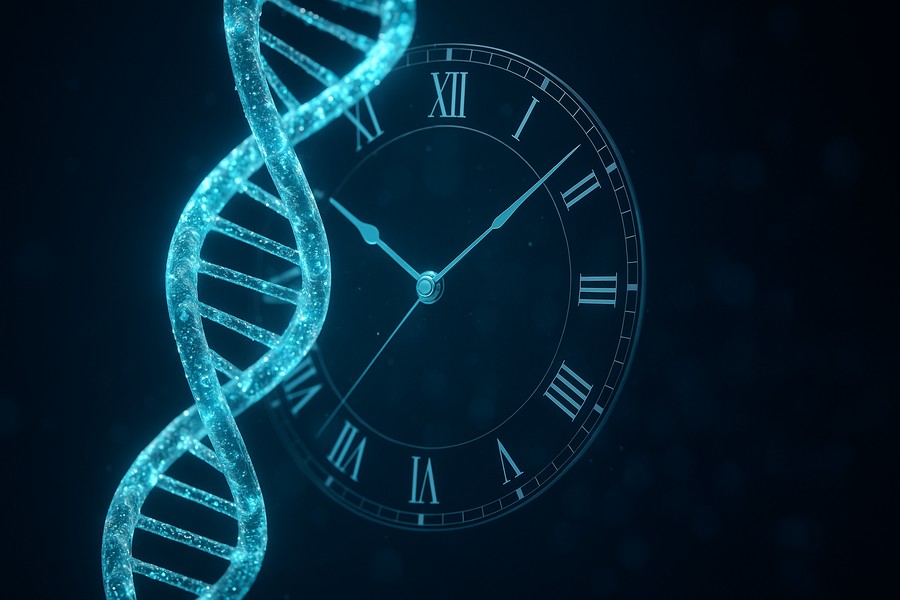
The provocative insight is that the music is still there. The instructions have not been lost, only obscured. If those metaphorical scratches can be polished away, the cell can once again read the original score. Youthfulness, in this framework, is not about building a new body from scratch, but about reminding the existing one how to be young.
Sinclair’s scientific journey began with sirtuins, a family of proteins that help govern cellular health and longevity. They respond to stress, energy availability and environmental cues, acting as guardians of the genome. His early work thrust molecules like resveratrol, famously associated with red wine, into the spotlight, along with compounds such as NMN, a precursor to NAD+ that supports cellular energy metabolism. The promise was that, by boosting these pathways, we could mimic some of the benefits of exercise and fasting at the molecular level.

But it is his more recent leap into epigenetic reprogramming that has turned his lab into one of the most closely watched in the world. Building on the Nobel Prize–winning work of Shinya Yamanaka, who identified a set of genes capable of turning adult cells back into pluripotent stem cells, Sinclair asked a bold question: what if you could dial this process back? Instead of resetting a cell all the way to an embryonic state – a scenario that would dissolve our tissues into biological chaos – could you rewind it just enough to restore youthful function?
His team’s experiments suggest the answer is yes. Using a subset of these so-called Yamanaka factors, they treated blind mice with crushed optic nerves, a form of injury long considered irreversible. By reducing epigenetic noise, the neurons “remembered” how to behave like their younger selves, regrew and, remarkably, restored vision. That work has since been extended to non-human primates, where similar techniques have been used to rejuvenate the optic nerves of green monkeys. It is a critical bridge between animal models and eventual human therapies.
While these gene therapies are powerful, they are also expensive and technically complex. Sinclair now talks about his current mission as a kind of Manhattan Project for aging: the search for a chemical cocktail that can deliver the same rejuvenating signal without the need for viral vectors. In 2023 and 2024, his group published data on combinations of small molecules that appear capable of reversing cellular aging markers in a matter of days. Artificial intelligence is brought into the hunt, screening vast numbers of potential combinations in silico before the most promising candidates are tested in the lab. The endgame is simple to describe and radical to contemplate – a safe, affordable pill that could be taken like a daily vitamin to continually reset the body’s epigenetic clock.
Alongside the science, Sinclair is betting heavily on measurement. He co-founded Tally Health with the ambition of making biological age testing as commonplace as checking blood pressure. Using DNA methylation clocks that read the epigenetic state of the genome, the company offers consumers a way to see whether their lifestyle, diet and supplement choices are actually slowing their biological aging. It is the feedback loop longevity enthusiasts have long wanted: a personal scoreboard for time itself.

He is also a co-founder of Life Biosciences, a company focused on diseases once written off as incurable. By applying partial epigenetic reprogramming, Life Biosciences is targeting conditions such as optic neuropathy and liver disease, with human clinical trials projected to begin soon. If successful, these therapies will not simply patch damaged organs but return them to a younger state, healing by turning the clock back rather than merely compensating for loss.
In the shorter term – over the next five to ten years – Sinclair envisions a quiet revolution in how we relate to our own aging. He expects that knowing your epigenetic age will become as unremarkable as knowing your weight or BMI. At-home test kits will tell you not just how old you are in years, but how old your cells “think” you are, and how quickly that number is changing.
Parallel to this will be the arrival of the first generation of age-modifying medicines. These will not be dramatic immortality drugs, but more targeted therapies, perhaps beginning with the eye or liver, that rejuvenate specific organ systems. Medicines that restore sight by making optic tissue young again, or that reverse fibrosis in the liver, could be among the earliest proofs of concept that rejuvenation is not science fiction.

Lifestyle, however, remains the front line. Sinclair is a vocal advocate of hormesis – the idea that controlled stress can provoke the body’s most powerful survival responses. Intermittent fasting, deliberate heat stress in saunas, cold exposure and high-intensity exercise all fall into this category. In the immediate future, these largely free interventions are likely to remain our most accessible tools for slowing the march of time, even as the new wave of therapeutics moves from lab bench to clinic.
His longer-term vision pushes fully into the realm of what used to be called science fiction. Sinclair talks about “longevity escape velocity” – the moment when advances in medicine add more than a year of healthy life for every year we live. In that scenario, human lifespan becomes an open-ended variable. He has publicly suggested that the first person to live to 150 may already be among us.
In this imagined future, aging becomes something people manage proactively. Every decade or so, you might visit a clinic for a rejuvenation treatment. You could live from twenty to sixty, undergo a controlled course of reprogramming that resets your biological age back to thirty, then repeat the cycle again and again. The body would still experience time, but in loops rather than a straight line towards decline.

The societal implications are immense. If people do not spend their final decades weakened, dependent and sick, the economic impact alone would be measured in trillions of dollars saved. A world where ninety-year-olds walk, think and work like forty-year-olds is a world where wisdom, experience and creativity remain active for far longer. Careers extend, families span more generations in full health, and the definition of a “lifetime” of contribution is rewritten.
Beneath the headlines and bold predictions, Sinclair’s core message is strikingly simple: aging is not just the story of things falling apart. It is, to a meaningful extent, a story of lost information – a software glitch in the operating system of life. And software, unlike hardware, can be debugged, rebooted and upgraded.
The cure for death itself may remain far over the horizon. But if Sinclair and his colleagues are right, the decision to remain biologically young for much longer than any previous generation is moving steadily into the realm of choice rather than chance. The age of reversal, in other words, may already have begun.