

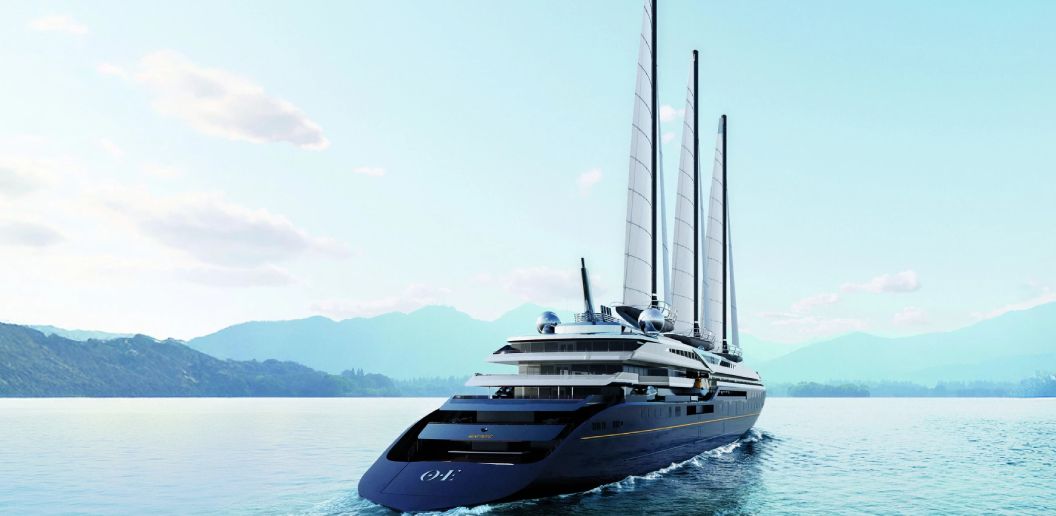
Orient Express Corinthian, the world’s largest luxury sailing yacht, marks the dawn of a new era in ultra-premium ocean travel — where engineering marvel meets the art de vivre of France.
There are milestones in travel that redefine what is possible, and then there are the rare, once-in-a-generation moments that redefine the very nature of desire itself. The christening of Orient Express Corinthian at the Chantiers de l’Atlantique shipyard in Saint-Nazaire, France, is unquestionably the latter. A decade in the making, this 220-metre, 15,000-tonne vessel has claimed the title of the world’s largest sailing yacht — and in doing so, has irrevocably altered the horizon of luxury travel.
The ceremony itself was theatre befitting the occasion. Four Fouga Magister jets traced the French tricolour across the sky above Saint-Nazaire as the Corinthian’s three soaring SolidSail rigs were raised in a choreographed sequence that drew audible astonishment from those in attendance. The French ensign was formally presented, the vessel entrusted to her captain, and as La Marseillaise rang out across the harbour, it became clear that Orient Express had achieved something extraordinary: the translation of a mythic brand legacy from rail to sea.
That legacy is considerable. Nearly 140 years after the original Orient Express first threaded its way from Paris to Istanbul, redefining what civilised travel could be, the brand now operates under the stewardship of Accor — which formed a strategic alliance with LVMH in 2024 — and has extended its reach from a 17th-century palazzo in Rome to the rails of Italy’s most cinematic landscapes. Corinthian completes what can only be described as a trifecta of prestige. The sea was always the final frontier.
At 721.8 feet in length, the statistics alone command attention. Yet the Corinthian’s most remarkable achievement is not its scale but its propulsion. She is the first cruise vessel ever equipped with the SolidSail wind propulsion system, a breakthrough developed by Chantiers de l’Atlantique from expertise gained in offshore racing. Three carbon masts, each rising over 100 metres and carrying 1,500 square metres of sail, rotate through a full 360 degrees to maintain optimal trim in any wind direction. In sea trials, the vessel achieved 12 knots under sail alone in 20-knot winds — an unprecedented result for a ship of this scale. Under ideal conditions, the Corinthian can be driven entirely by wind power. The carbon masts can also tilt to 70 degrees, allowing the ship to clear the world’s great bridges and granting her unparalleled freedom of navigation.
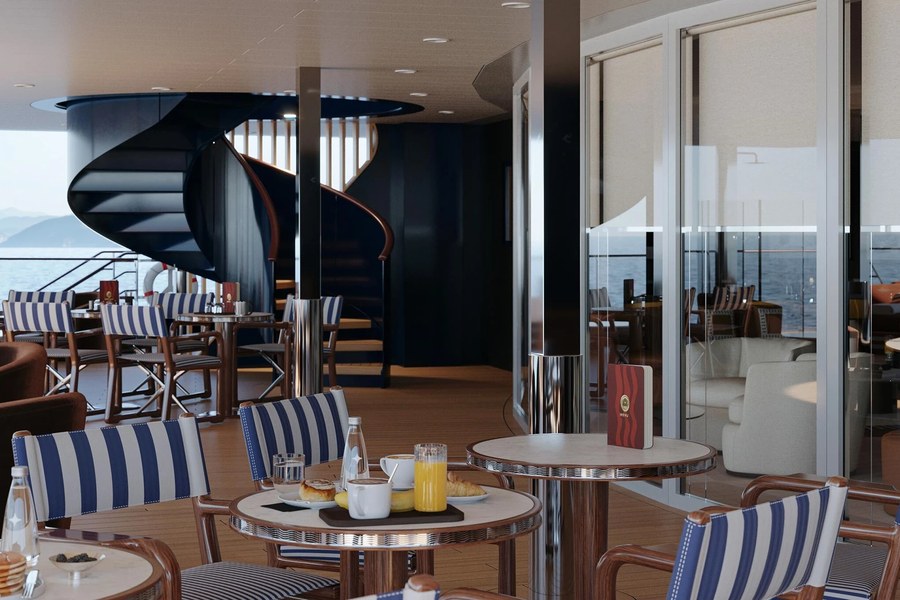
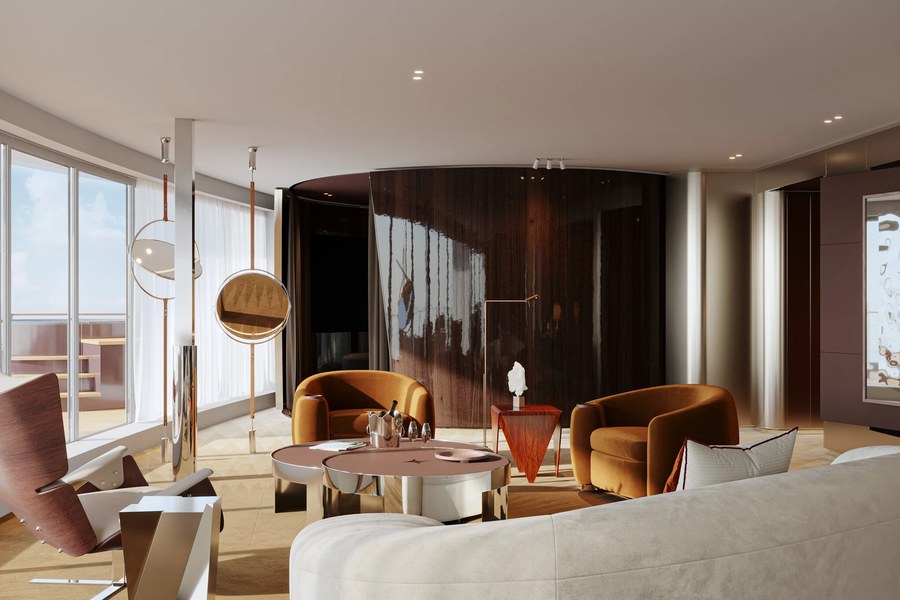
If the engineering is revolutionary, the interiors represent something no less extraordinary: the work of some 2,000 French artisans who drew on the golden age of ocean liners and the romance of the Orient Express train itself to create spaces of profound, unhurried elegance. Artistic Director Maxime d’Angeac has overseen every detail, sourcing genuine marble, hand-selected hardwoods, and supple leathers from across France. Because of the sheer weight of these authentic materials, special certification was required for their use at sea — an indication of how uncompromising the vision has been from the outset.
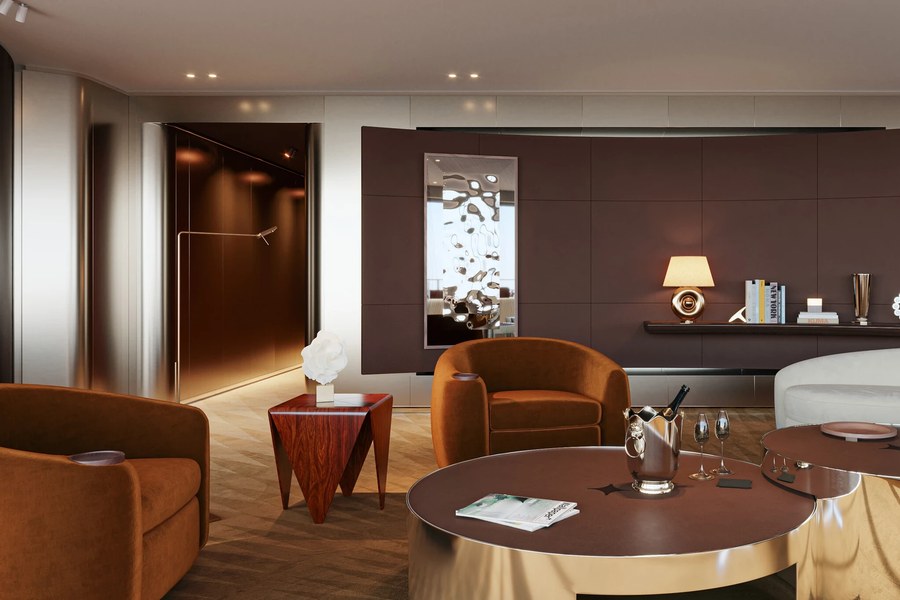
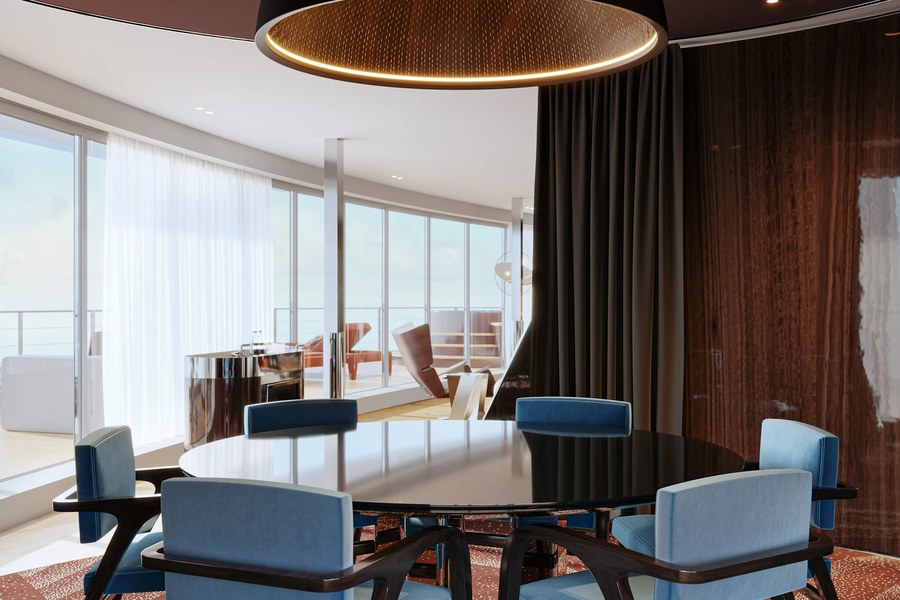
Spread across four decks, the Corinthian’s 54 suites range from 45 to 230 square metres, each featuring panoramic windows of 3.6 metres and ceiling heights raised 25 centimetres above current industry standards. The effect is one of extraordinary space and light, with unobstructed ocean views framing every suite. A dedicated butler attends each cabin as a matter of course, and every aspect of the experience is offered on a fully inclusive basis.
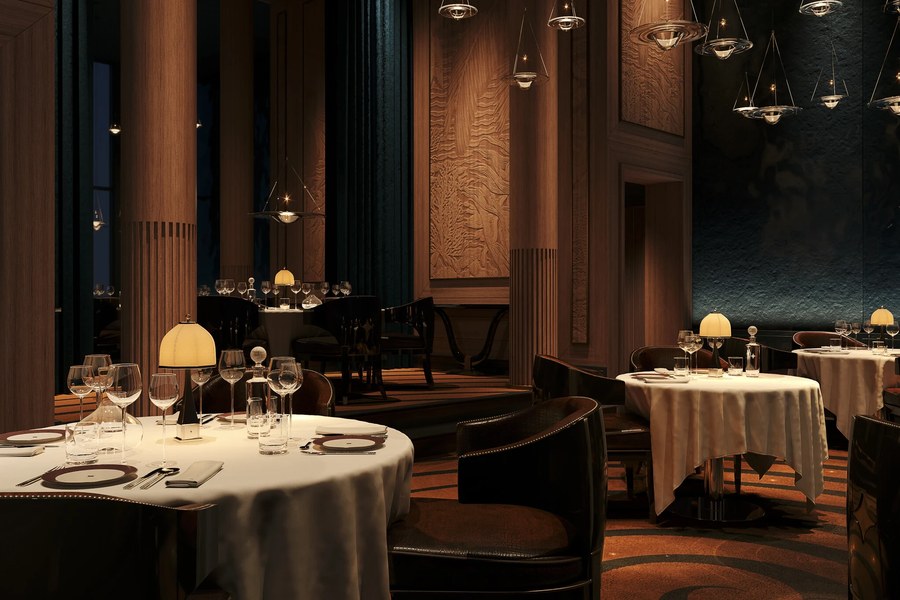
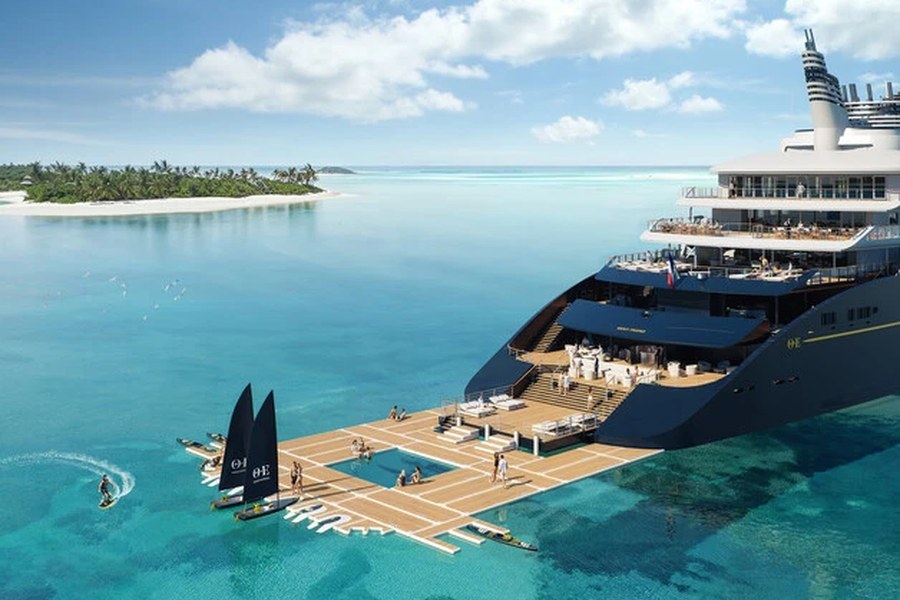
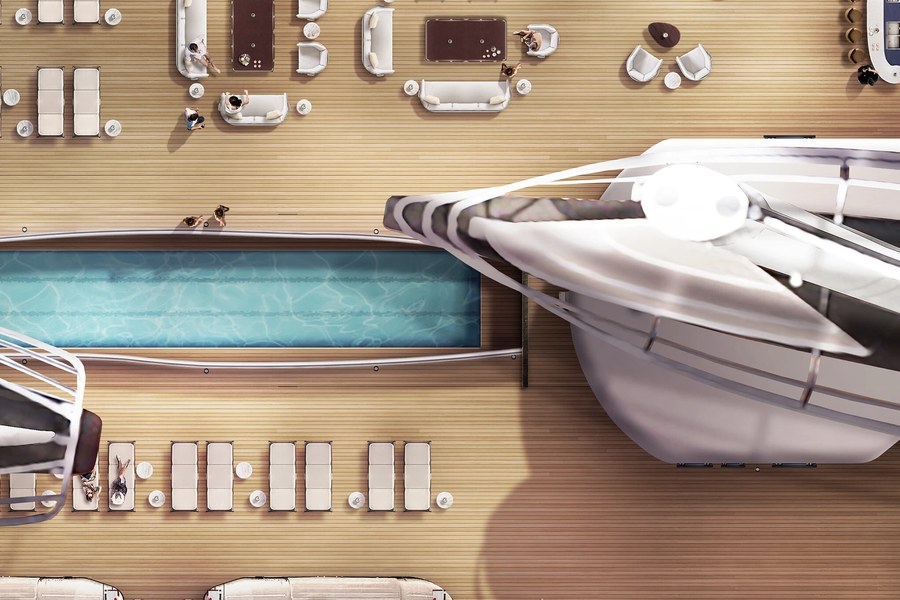
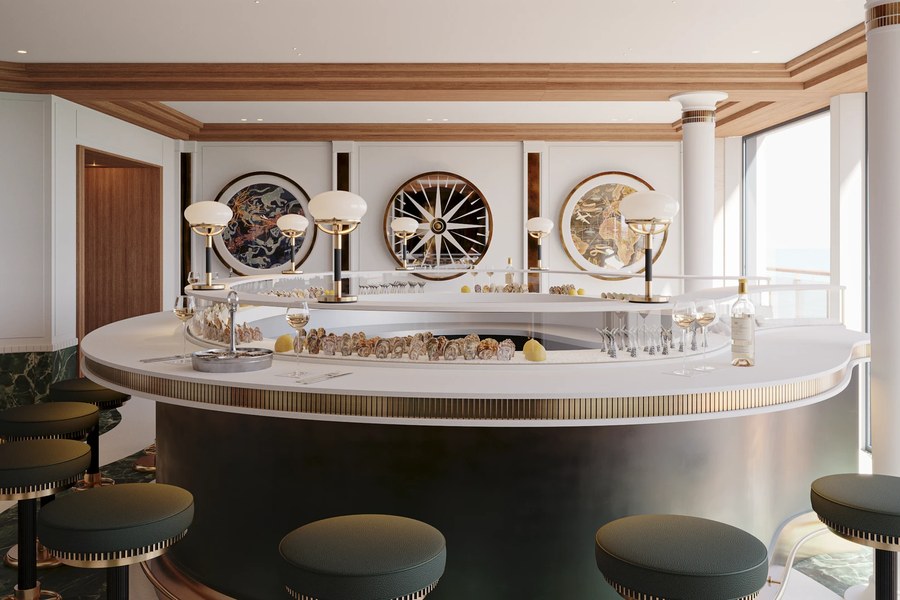
Gastronomy is placed in the hands of Yannick Alléno, the multi-Michelin-starred chef whose name is synonymous with the apex of French culinary innovation. Five restaurants and private dining rooms fall under his direction, with the flagship La Table de l’Orient Express featuring a double-height ceiling that echoes the grand dining cars of the original train. Eight bars complete the social offering, among them an Art Deco speakeasy, a 115-seat cabaret hall, and — in a gesture of almost audacious confidence — a fully equipped recording studio. A Guerlain spa, the first of its kind at sea, offers an included thermal suite alongside a 16.5-metre swimming lane, pool, and a marina platform with direct access to the water.
The inaugural season unfolds across the Mediterranean and the Adriatic from May through October, before the Corinthian crosses the Atlantic for a winter in the Caribbean, calling at Saint-Barthélemy, Barbados, the Tobago Cays, and Moskito Island. Longer voyages, such as eight nights along the Amalfi Coast, begin at €45,600 per suite. A sister vessel, Orient Express Olympian, is already in fit-out following her April launch, with her own debut season expected in 2027.
In a luxury landscape increasingly crowded with bold claims, Orient Express Corinthian earns its superlatives. It stands as the most ambitious marriage of heritage and engineering ambition in the history of maritime travel: a vessel that does not merely carry passengers across the sea, but carries them into a different understanding of what travel can mean.